Every fourth Thursday of November, the United States collectively pauses to celebrate Thanksgiving, one of its most emblematic traditions. Beyond the roasted turkey, televised parades, and Black Friday deals, the holiday represents a meaningful moment to reflect on what unites us: gratitude, family, and community.
Origins: Between History and Myth
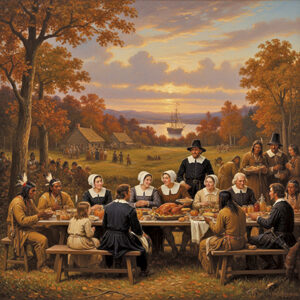
The most widespread story places the first Thanksgiving in 1621, when newly arrived English pilgrims shared a meal with the Wampanoag tribe in Plymouth, present-day Massachusetts. The traditional narrative highlights the cooperation between both groups, who worked together to survive a harsh winter.
Although historians note that this version overlooks later tensions between colonists and Indigenous peoples, the event has become a symbol of coexistence and appreciation—values still central to the celebration.
It was President Abraham Lincoln who, in the midst of the Civil War, officially proclaimed Thanksgiving a national holiday in 1863 in an effort to promote unity. Since then, the celebration has endured year after year, evolving and embracing new cultural elements.
Rituals and Customs that Shape the Day
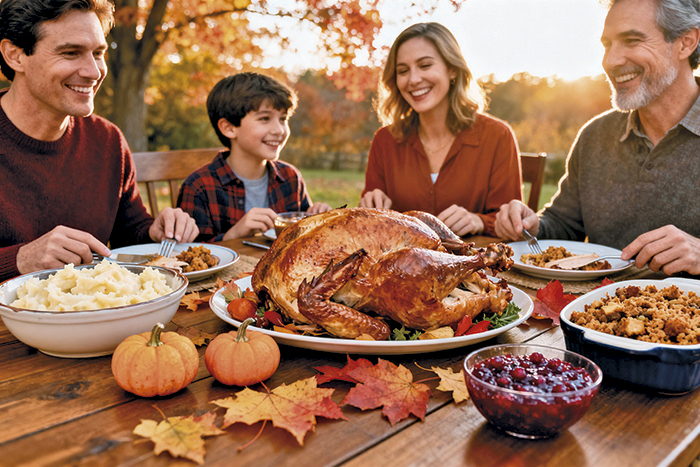
If there is an unquestionable culinary star, it is the roasted turkey. It is estimated that more than 45 million turkeys are consumed on this day alone. The dinner table often includes mashed potatoes, cranberry sauce, stuffing, and apple or pumpkin pies—flavors that reflect the country’s cultural diversity.
At the same time, the Macy’s Parade in New York City marks the informal beginning of the holiday season. Giant balloons, colorful floats, and musical numbers entertain millions along the streets and on television.
Another special moment takes place at the White House during the “presidential pardon,” a tradition in which the president symbolically spares one or two turkeys, allowing them to live the rest of their days freely.
 Gratitude at the Center
Although consumption and festivity are part of the day, the essence of Thanksgiving lies in acknowledging what we have. Families traditionally gather around the table to share aloud what they are thankful for: health, jobs, friendships, accomplishments, or even difficult lessons learned.
In a nation defined by diversity, the holiday has also become an opportunity to honor Indigenous history and reflect on Native perspectives. Universities and organizations hold events encouraging dialogue, respect, and awareness surrounding the deeper origins of the celebration.
A Day for Giving Back
Thanksgiving is also lived beyond the home. Thousands of volunteers donate their time in community kitchens, helping serve meals to people experiencing homelessness or financial hardship.
In many cities, “Turkey Trots”—short-distance charity runs—raise funds for local organizations. This spirit of solidarity demonstrates how gratitude can translate into action, strengthening social bonds.
Between Tradition and Modernity
Times change, and so does the celebration. Today, diverse tables mix traditional recipes with international dishes, reflecting the multicultural makeup of U.S. society. Latino families may add tamales, rice, or turkey seasoned with regional spices; Asian communities may contribute noodles or dumplings.
Another increasingly popular custom is “Friendsgiving,” informal gatherings among friends—often far from their families—that reinforce the idea that family is not always defined by blood.
A Holiday Beyond Borders
Although Thanksgiving is fundamentally an American holiday, its influence extends beyond national boundaries. Canada celebrates a similar holiday in October, and American communities around the world recreate the tradition in embassies, military bases, and private homes.
For many newly arrived immigrants, celebrating Thanksgiving for the first time offers a way to connect with local culture while engaging in personal reflection.
Conclusion: A Necessary Pause
In a fast-paced, hyper-connected world, Thanksgiving offers something exceptional: a moment to step away from the noise, gather with loved ones, and appreciate the present.
It is not just a feast nor a rigid tradition; it is an open invitation to remember that—even during challenging times—there is always something to be grateful for. As tables fill with food and streets with celebration, a quiet message spreads throughout the country: gratitude unites us, humanizes us, and brings us back to what matters most.
In the end, Thanksgiving is not just a date on the calendar.
It is an attitude we can carry throughout the year.
Un puente de gratitud: Así celebra Estados Unidos el espíritu de Thanksgiving
Cada cuarto jueves de noviembre, Estados Unidos se detiene colectivamente para celebrar Thanksgiving, una de sus tradiciones más emblemáticas. Más allá del pavo horneado, los desfiles televisados y las ofertas del viernes negro, esta fecha representa una pausa necesaria para reflexionar sobre aquello que nos une: la gratitud, la familia y la comunidad.
Orígenes: entre historia y mito
El relato más difundido sitúa el primer Thanksgiving en 1621, cuando peregrinos recién llegados de Inglaterra compartieron una comida con la tribu wampanoag en Plymouth, actual Massachusetts. La narración tradicional destaca la cooperación entre ambos grupos, quienes trabajaron juntos para sobrevivir al difícil invierno.
Si bien los historiadores señalan que esta versión omite tensiones posteriores entre colonos e indígenas, la escena se ha convertido en símbolo de convivencia y agradecimiento, valores que aún sustentan la festividad.
Fue el presidente Abraham Lincoln quien, en medio de la Guerra Civil, proclamó oficialmente el Día de Acción de Gracias en 1863, con la intención de promover la unidad nacional. Desde entonces, la celebración se ha mantenido año tras año, evolucionando e incorporando nuevos elementos culturales.
 Rituales y costumbres que marcan la fecha
Si existe un protagonista culinario indiscutible, es el pavo asado. Se estima que más de 45 millones de pavos se consumen anualmente durante este día. La mesa suele incluir puré de papas, salsa de arándanos, relleno, pasteles de manzana o calabaza, en una mezcla de sabores que refleja la diversidad cultural del país.
En paralelo, el desfile de Macy’s en Nueva York marca el inicio informal de la temporada navideña. Gigantescos globos, carrozas coloridas y números musicales desfilan frente a millones de espectadores en las calles y desde sus hogares.
Otro momento especial se vive en la Casa Blanca con la ceremonia del “indulto presidencial”, donde el mandatario perdona simbólicamente a uno o dos pavos para que vivan el resto de sus días en libertad.
La gratitud, el verdadero centro
Aunque el consumo y la celebración son parte del día, la esencia de Thanksgiving reside en reconocer lo que se tiene. Es tradición que las familias se reúnan alrededor de la mesa y compartan en voz alta aquello por lo que están agradecidos: salud, trabajo, amistades, logros o incluso aprendizajes difíciles.
En un país marcado por la diversidad, esta fecha también se ha convertido en oportunidad para honrar distintas raíces y reflexionar sobre la historia indígena. Organizaciones y universidades realizan eventos que invitan a reconocer y respetar las perspectivas nativas sobre el origen de la festividad.
Un día para compartir
Más allá del hogar, Thanksgiving también se vive en comunidad. Miles de voluntarios ofrecen su tiempo en comedores sociales para llevar alimentos a personas sin hogar o en situación de necesidad.
En muchas ciudades, las “Turkey Trots” —carreras benéficas de corta distancia— recaudan fondos para organizaciones locales. Este espíritu solidario demuestra que la gratitud puede convertirse en acción concreta, fortaleciendo los lazos sociales.
Entre tradición y modernidad
Los tiempos cambian, y con ellos la forma de celebrar. Hoy es común ver mesas diversas donde conviven recetas tradicionales con platos internacionales, reflejando el mosaico cultural estadounidense. Familias latinas integran tamales, arroz o pavo sazonado con especias regionales; comunidades asiáticas incorporan fideos o dumplings.
También se han vuelto frecuentes las reuniones entre amigos conocidas como “Friendsgiving”, donde grupos que viven lejos de su familia se reúnen para celebrar en un formato más informal, reforzando la idea de que la familia no siempre es solo de sangre.
Un día que trasciende fronteras
Aunque es una celebración esencialmente estadounidense, Thanksgiving ha encontrado eco en otros países. En Canadá se festeja en octubre, mientras que comunidades estadounidenses alrededor del mundo replican la tradición en embajadas, bases militares y hogares privados.
Para muchos inmigrantes recién llegados, participar por primera vez en Thanksgiving significa integrarse a una costumbre local que combina convivencia con una profunda reflexión personal.
Conclusión: una pausa necesaria
En un mundo acelerado y altamente conectado, Thanksgiving ofrece algo extraordinario: un momento para desconectarse del ruido, reunirse con los seres queridos y valorar el presente.
No se trata solo de un banquete ni de una tradición rígida; es una invitación abierta a recordar que, incluso en tiempos complejos, siempre hay motivos para agradecer. Y mientras las mesas se llenan de comida y las calles de celebraciones, un mensaje silencioso recorre el país: la gratitud nos une, nos humaniza y nos recuerda lo esencial.
Porque, al final, Thanksgiving no es únicamente un día en el calendario. Es una actitud que puede acompañarnos todo el año.