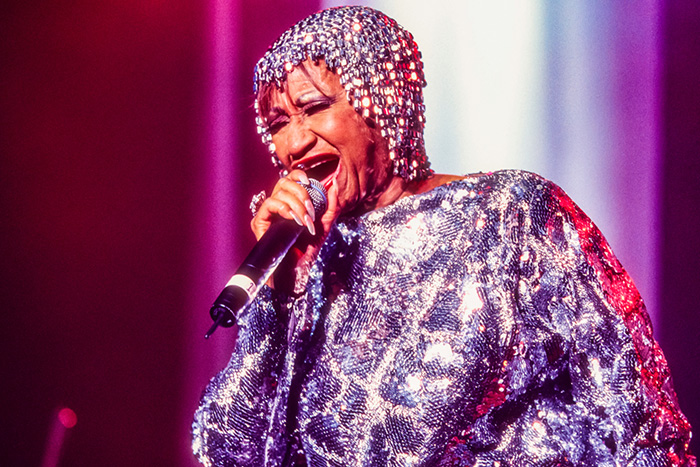
In 2025, the world celebrates the centennial of one of the most powerful and influential voices in Latin music: Celia Cruz, the undisputed Queen of Salsa. A hundred years have passed since her birth in Havana, yet her voice still vibrates, her energy continues to inspire, and her iconic exclamation — “¡Azúcar!” — remains a timeless symbol of joy, resilience, and Afro-Caribbean pride.
In the United States — her artistic home for more than four decades — Celia not only conquered stages and hearts, but also opened doors for generations of Latin artists, breaking racial, linguistic, and cultural barriers. A century later, her legacy still stands as a bridge between Latino identity and the musical history of this country.
From Havana to New York: The Rise of a Legend
Celia Caridad Cruz Alfonso was born on October 21, 1925, in the neighborhood of Santos Suárez in Havana, Cuba. From an early age, she showed a natural gift for singing, inspired by the Afro-Cuban rhythms that surrounded her: son, guaguancó, mambo, and bolero. In the 1950s, she joined the legendary Sonora Matancera, one of Cuba’s most popular groups, and achieved international fame.
Her destiny changed forever after the Cuban Revolution. In 1960, while touring in Mexico, Celia decided not to return to the island. She settled in the United States — first in New Jersey, later in New York — where she began a new artistic chapter amid the salsa boom. In exile, her voice became a flag of freedom, identity, and cultural pride.
“Celia didn’t just sing; she represented all of us who left our homeland with broken hearts,” said the late musician Johnny Pacheco, co-founder of Fania Records, the label where Celia recorded some of her most iconic albums. Alongside Tito Puente, Willie Colón, and other Fania All-Stars, Celia Cruz helped consolidate a genre that would make the whole world dance: salsa.
A Century of ‘Azúcar’: Tributes and Celebrations Across the U.S.
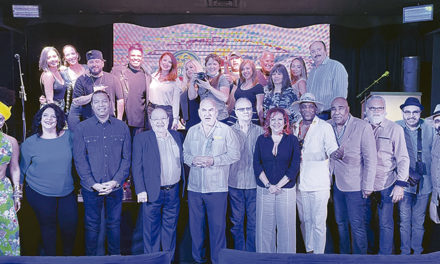
The Celia Cruz Centennial (1925–2025) is more than an anniversary — it’s a cultural revival, a nationwide celebration honoring her influence in American and Latin music. Across cities like New York, Miami, Los Angeles, and Chicago, concerts, exhibitions, and academic programs are planned to honor her life and enduring spirit.
Concerts and Musical Tributes
At Jazz at Lincoln Center, an October show titled “Celia Cruz: A Centennial Celebration!” will be directed by bassist Carlos Henriquez and feature artists like Aymée Nuviola, Alain Pérez, and Ariacne Trujillo. On August 9, 2025, Central Park will host a major outdoor concert featuring Isaac Delgado, Brenda Navarrete, and Melvis Santana, reviving the unstoppable energy of the Queen of Salsa.
In Miami — a stronghold of Cuban exile culture — the Celia Cruz Foundation has organized gala events and benefit concerts celebrating not just her music but her contributions to Latino identity in the U.S. Among the highlights is the release of a special album, “En Vivo: 100 Años de Azúcar,” featuring rare recordings and new versions of classics like Bemba Colorá, Quimbara, and La Dicha Mía.
Museums and Symbolic Honors
The Smithsonian National Museum of American History has reopened its permanent exhibition “¡Azúcar!”, displaying Celia’s original stage costumes, photos, records, and personal items. Universities such as Indiana University and Florida International University are hosting academic symposiums exploring her role in the Latin diaspora and Afro-Caribbean representation in popular culture.
The tributes go beyond culture. In 2024, Celia Cruz became the first Afro-Latina to appear on a U.S. coin, as part of the American Women Quarters Program. Her image on the 25-cent coin represents more than an artistic honor — it symbolizes the millions of Latinos who, like her, left their homeland but never lost their identity.
Celia Cruz: A Symbol of Strength, Pride, and Diversity
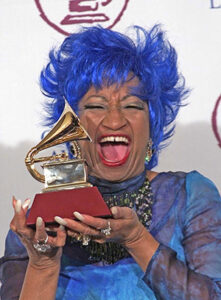
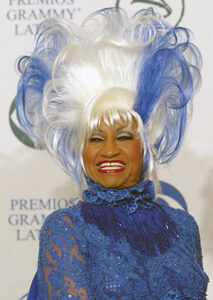
13/07/2017 Su sonrisa, los colores vibrantes y «azúcar» como grito de guerra se convirtieron en las señas de identidad de Celia Cruz. La cantante cubana murió tal día como hoy hace cuatro años, pero su legado sigue intacto, manteniéndola como una mejores voces iberoamericanas de todos los tiempos
LATINOAMÉRICA CUBA CULTURA
GETTY IMAGES / SCOTT GRIES
Beyond her unmistakable voice, Celia Cruz was — and remains — a symbol of empowerment. At a time when being a Black Latina woman meant facing multiple barriers, Celia broke them all with grace, charisma, and unmatched talent.
Her famous cry, “¡Azúcar!”, was more than a catchphrase. It embodied her people’s spirit and celebrated life itself. In interviews, Celia explained that the word honored the enslaved Africans who worked in Cuba’s sugar plantations. With that single word, she transformed historical pain into a message of joy, resistance, and Afro-Latino pride.
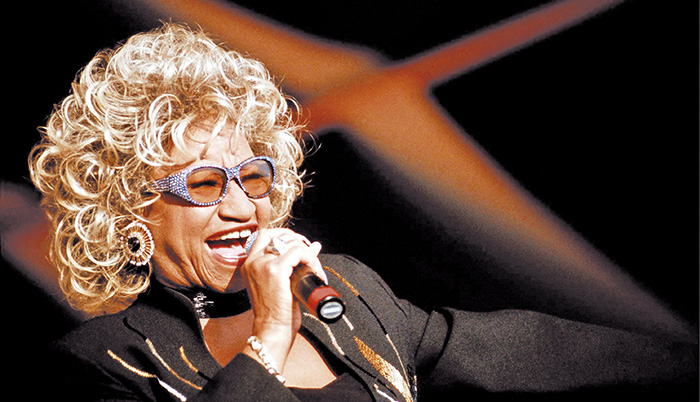
Her vibrant image — flamboyant wigs, glittering gowns, radiant smile — became an emblem of female empowerment. Celia Cruz proved that one can succeed without losing authenticity, that Latin culture belongs at the center of American art, and that joy can be a powerful form of resilience.
A Legacy That Lives On
Throughout her career, Celia Cruz recorded more than 70 albums and earned three Grammy Awards and four Latin Grammys. Her influence extends far beyond her lifetime: artists like Gloria Estefan, Jennifer Lopez, Cardi B, Aymée Nuviola, and La India have cited her as inspiration. Even today, traces of her music and message echo in remixes, tributes, and cultural campaigns.
In 2025, her music will return through special reissues on streaming platforms, vinyl collector’s editions, and documentaries by Craft Latino and Sony Music. Meanwhile, public schools in New York and Miami will include educational materials about her life and cultural impact as part of Hispanic Heritage curricula.
“Celia Cruz doesn’t belong just to Cuba or to salsa — she belongs to the world,” said producer Emilio Estefan in a recent interview. “Her message of joy and unity is more relevant than ever in a country that celebrates diversity as part of its identity.”
A Century Later: Her Voice Still Resonates
Celebrating 100 years of Celia Cruz in the United States means more than honoring a music career. It’s about recognizing the spirit of millions of immigrants who arrived chasing dreams, who endured displacement, and who found in music a home. It’s about celebrating the power of Latina women, the richness of Afro-Caribbean culture, and the unifying strength of art.
Celia Cruz didn’t just teach us how to dance salsa — she taught us how to celebrate life without fear, how to lift our voices with joy, and how to remember that Latin flavor is an essential part of the American soul.
A hundred years after her birth, her rhythm still shakes the world, her laughter still echoes through the streets of Miami and New York, and her legacy keeps inspiring every generation that embraces its roots with pride.
Because as long as there’s a Latin community celebrating its heritage, someone, somewhere, will be shouting with her same unstoppable spirit:
¡Azúcar! — Sugar!
Celebrando los 100 años de Celia Cruz: un siglo de sabor, orgullo y legado latino en Estados Unidos
En 2025, el mundo celebra el centenario de una de las voces más poderosas e influyentes de la música latina: Celia Cruz, la indiscutible Reina de la Salsa. Han pasado cien años desde su nacimiento en La Habana, y sin embargo, su voz aún vibra, su energía continúa inspirando, y su icónica exclamación —“¡Azúcar!”— sigue siendo un símbolo eterno de alegría, resiliencia y orgullo afrocaribeño.
En los Estados Unidos —su hogar artístico por más de cuatro décadas— Celia no solo conquistó escenarios y corazones, sino que también abrió puertas para generaciones de artistas latinos, rompiendo barreras raciales, lingüísticas y culturales. Un siglo después, su legado sigue siendo un puente entre la identidad latina y la historia musical de este país.
De La Habana a Nueva York: El ascenso de una leyenda
 Celia Caridad Cruz Alfonso nació el 21 de octubre de 1925, en el barrio de Santos Suárez, en La Habana, Cuba. Desde muy joven demostró un don natural para el canto, inspirada por los ritmos afrocubanos que la rodeaban: son, guaguancó, mambo y bolero. En la década de 1950, se unió a la legendaria Sonora Matancera, uno de los grupos más populares de Cuba, y alcanzó fama internacional.
Su destino cambió para siempre tras la Revolución Cubana. En 1960, mientras estaba de gira en México, Celia decidió no regresar a la isla. Se estableció en Estados Unidos —primero en Nueva Jersey y luego en Nueva York— donde comenzó un nuevo capítulo artístico en medio del auge de la salsa. En el exilio, su voz se convirtió en una bandera de libertad, identidad y orgullo cultural.
“Celia no solo cantaba; representaba a todos los que dejamos nuestra tierra con el corazón roto”, dijo el fallecido músico Johnny Pacheco, cofundador de Fania Records, el sello donde Celia grabó algunos de sus álbumes más emblemáticos. Junto a Tito Puente, Willie Colón y otros Fania All-Stars, Celia Cruz ayudó a consolidar un género que haría bailar al mundo entero: la salsa.
Un siglo de ‘Azúcar’: Tributos y celebraciones en todo EE.UU.
El Centenario de Celia Cruz (1925–2025) es más que un aniversario: es un renacimiento cultural, una celebración nacional que honra su influencia en la música estadounidense y latina. En ciudades como Nueva York, Miami, Los Ángeles y Chicago, se han planeado conciertos, exposiciones y programas académicos para rendir homenaje a su vida y su espíritu perdurable.
Conciertos y homenajes musicales
En Jazz at Lincoln Center, un espectáculo titulado “Celia Cruz: A Centennial Celebration!” será dirigido por el bajista Carlos Henriquez e incluirá a artistas como Aymée Nuviola, Alain Pérez y Ariacne Trujillo. El 9 de agosto de 2025, Central Park acogerá un gran concierto al aire libre con la participación de Isaac Delgado, Brenda Navarrete y Melvis Santana, reviviendo la energía imparable de la Reina de la Salsa.
En Miami —bastión de la cultura del exilio cubano— la Fundación Celia Cruz ha organizado galas y conciertos benéficos que celebran no solo su música, sino también su contribución a la identidad latina en EE.UU. Entre los eventos destacados se encuentra el lanzamiento del álbum especial “En Vivo: 100 Años de Azúcar”, con grabaciones raras y nuevas versiones de clásicos como Bemba Colorá, Quimbara y La Dicha Mía.
Museos y homenajes simbólicos
El Smithsonian National Museum of American History ha reabierto su exposición permanente “¡Azúcar!”, que muestra trajes originales de Celia, fotografías, discos y objetos personales. Universidades como Indiana University y Florida International University realizarán simposios académicos sobre su papel en la diáspora latina y la representación afrocaribeña en la cultura popular.
Los homenajes van más allá de la cultura. En 2024, Celia Cruz se convirtió en la primera afrolatina en aparecer en una moneda estadounidense, como parte del American Women Quarters Program. Su imagen en la moneda de 25 centavos representa más que un honor artístico: simboliza a los millones de latinos que, como ella, dejaron su tierra natal sin perder su identidad.
Celia Cruz: símbolo de fuerza, orgullo y diversidad
Más allá de su inconfundible voz, Celia Cruz fue —y sigue siendo— un símbolo de empoderamiento. En una época en la que ser una mujer negra y latina significaba enfrentar múltiples barreras, Celia las rompió todas con gracia, carisma y talento incomparable.
Su famoso grito “¡Azúcar!” era más que una frase distintiva: encarnaba el espíritu de su pueblo y celebraba la vida misma. En entrevistas, Celia explicó que esa palabra rendía homenaje a los africanos esclavizados que trabajaron en los ingenios azucareros de Cuba. Con una sola palabra, transformó el dolor histórico en un mensaje de alegría, resistencia y orgullo afro-latino.
Su imagen vibrante —pelucas llamativas, vestidos brillantes y sonrisa radiante— se convirtió en un emblema de empoderamiento femenino. Celia Cruz demostró que se puede triunfar sin perder la autenticidad, que la cultura latina pertenece al corazón del arte estadounidense y que la alegría puede ser una poderosa forma de resiliencia.
Un legado que sigue vivo
A lo largo de su carrera, Celia Cruz grabó más de 70 álbumes y obtuvo tres premios Grammy y cuatro Latin Grammy. Su influencia trasciende generaciones: artistas como Gloria Estefan, Jennifer Lopez, Cardi B, Aymée Nuviola y La India la mencionan como inspiración. Hoy en día, su música y su mensaje siguen resonando en remixes, homenajes y campañas culturales.
En 2025, su obra regresará con reediciones especiales en plataformas digitales, vinilos de colección y documentales producidos por Craft Latino y Sony Music. Mientras tanto, escuelas públicas en Nueva York y Miami incluirán materiales educativos sobre su vida e impacto cultural dentro de los programas del Mes de la Herencia Hispana.
“Celia Cruz no pertenece solo a Cuba ni a la salsa —pertenece al mundo”, dijo el productor Emilio Estefan en una reciente entrevista. “Su mensaje de alegría y unidad es más relevante que nunca en un país que celebra la diversidad como parte de su identidad.”
Un siglo después: su voz aún resuena
Celebrar los 100 años de Celia Cruz en Estados Unidos significa más que rendir homenaje a una carrera musical. Es reconocer el espíritu de millones de inmigrantes que llegaron persiguiendo sueños, que enfrentaron el desarraigo y que encontraron en la música un hogar. Es celebrar el poder de las mujeres latinas, la riqueza de la cultura afrocaribeña y la fuerza unificadora del arte.
Celia Cruz no solo nos enseñó a bailar salsa: nos enseñó a celebrar la vida sin miedo, a levantar la voz con alegría y a recordar que el sabor latino es una parte esencial del alma estadounidense.
Cien años después de su nacimiento, su ritmo sigue sacudiendo al mundo, su risa aún resuena en las calles de Miami y Nueva York, y su legado continúa inspirando a cada generación que abraza sus raíces con orgullo.
Porque mientras exista una comunidad latina celebrando su herencia, alguien, en algún lugar, seguirá gritando con su mismo espíritu imparable:
¡Azúcar! — ¡Sugar!