Jesús Hernández
The Alliance for Aging, Inc. has served as the Area Agency on Aging for Miami-Dade and Monroe counties in Florida since 1988. It is a private, not-for-profit organization focused on helping older adults and individuals with disabilities remain in their home.
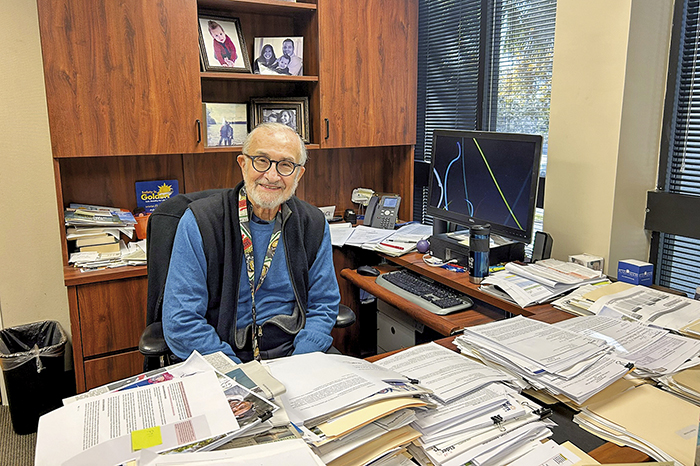
We spoke with Max B. Rothman, JD, LL.M., president and CEO of this so important community leader serving the needs of older people and people with disabilities.
– Can you explain how these services work and who is eligible to receive them?
Our overarching goal here is to provide home and community-based services to older adults and their caregivers in Miami-Dade and Monroe. Keep patients at home and out of hospitals, assisted living and nursing homes, whatever we can do to provide assistance at home or in the community that helps them remain independent, safe, and comfortable in their homes. We do other things like SHINE, which provides impartial information and counseling to anyone 65 and above. We have programs for veterans. Ee do a lot of different things. We manage millions of dollars through contracts with direct service providers throughout the community. And we monitor them to make sure that they’re carrying out their responsibilities in accordance with contractual requirements. We have the Aging and Disability Resource Center, where people can call 305 670 HELP to get information and assistance, possibly be referred for a full assessment, and eventually get into one of the programs that we fund or that the Agency for Healthcare Administration funds called the Medicaid Managed Long-Term Care Program. But the main point here is that hundreds of thousands of older people and their families can call us and find out about services, gain access to the service system in Miami-Dade or in Monroe County.
-What inspired you to take on the role of President and CEO of the Alliance for Aging?
I’ve been in the field of health and social services almost my entire career. But when I was a kid, one of my grandmothers was a person with much disability. I grew up with my mother taking care of her mother. And I saw the issues that one has in trying to provide assistance to an older person in need of care on a regular basis. And that was always inspiring to me, to get into this field. And I know many other older people along the way that I’ve been inspired by as well, in terms of their ability to continue working and volunteering. My father mandatorily retired at age 65, and he spent the next 10 years of his life volunteering. And I vowed that I would continue to work as long as I wanted to.
-How are your programs and services funded?
The Department of Elder Affairs of Florida is our overwhelmingly primary funding source under the Older Americans Act and they fund under what we call state-funded general revenue programs like Community Care for the Elderly, Home Care for the Elderly, the Alzheimer’s Disease Initiative, and so forth. We get a small amount from Miami-Dade County as we try to raise some money locally. Anybody can donate.
-The Alliance for Aging will hold its annual conference at the Hilton Miami Airport Blue Lagoon on May 7. In addition to the exhibit hall, there will be expert speakers and workshops. What can attendees expect?
We will have several experts, and we will also speak about how Artificial Intelligence is already and will impact older adults. I was reading an article on the federal government sponsoring some grants related to it and caregiving. Nobody’s ever talked about that before. This is brand new stuff.
-Miami-Dade County has the largest population of older adults in Florida, with more than half a million residents age 60 and over — and that number is expected to grow. How is your organization preparing to address the increasing demand?
We will continue to go to the legislature in Tallahassee and request more funding. That’s the only way we can do it. About 24% of the population are people aged 60 and above in Miami-Dade County, and 23% are within 125% of the poverty level. Those are the people that we predominantly serve because those are the needy people.
-Data also suggests that many older adults may experience chronic conditions such as diabetes or cognitive disorders like Alzheimer’s disease in the coming years. Do you have specific programs in place to support individuals and families dealing with these health challenges?
We administer a program called the Alzheimer’s Disease Initiative, which pays for adult daycare. They are people that are so severe that they can’t get out of daycare. So, we can send, or one of our providers can send someone into the home to assist them. The interesting thing is Miami-Dade County has the largest percentage of older adults with dementia in the country. In the country. And so, the challenge to meet the need is overwhelming. Our wait lists total in the thousands for all these programs. And diabetes, we have some health promotion programs administered by one of our team here that addresses diabetes. But those are educational programs. Otherwise, someone with diabetes typically might have other frailties as well, and they’ll be served by one of our service providers.
-There are concerns that federal programs such as Supplemental Nutrition Assistance Program (SNAP), formerly known as food stamps, could face funding reductions. How might potential cuts impact older adults, and how is your organization preparing to respond?
It could because our largest program is a congregate meal program and the home delivered meals. Close to two million home delivered meals. There are a lot of people that need food. We fund a million dollars to Feeding South Florida to provide home delivered meals. We could give them two million and they could find people to use it for. Poverty is pretty dramatic because 24% is under the poverty line [$15,960 annually for a single person and $33,000 for a family of four]. I assume that a lot of these people receive benefits from the state or the federal government. They might be getting Social Security or SSI. They’re hopefully get Medicare or Medicaid.
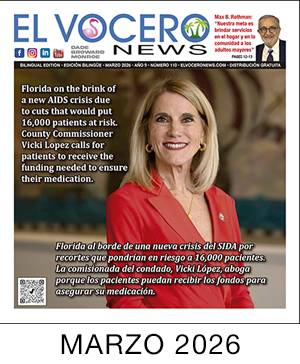
Max B. Rothman: “Nuestra meta es brindar servicios en el hogar y en la comunidad a los adultos mayores”
Jesús Hernández
La Alliance for Aging, Inc. ha servido como medio de ayuda a personas mayores en los condados de Miami-Dade County y Monroe County en Florida desde 1988. Es una organización privada sin fines de lucro enfocada en ayudar a permanecer en hogares.
Conversamos con Max B. Rothman, JD, LL.M., presidente y director ejecutivo de esta importante agencia comunitaria.
— ¿Puede explicar cómo funcionan estos servicios y quiénes son elegibles para recibirlos?
Nuestro objetivo principal es brindar servicios en el hogar y en la comunidad en Miami-Dade y Monroe. Buscamos mantener a los pacientes en sus hogares y fuera de hospitales, residencias asistidas y asilos de ancianos; hacemos todo lo posible para proporcionar asistencia que les permita seguir siendo independientes, seguros y cómodos en sus casas. También realizamos otras actividades como SHINE, que ofrece información y orientación a cualquier persona de 65 años o más. Contamos con programas para veteranos. Administramos millones de dólares a través de contratos con proveedores de servicios en y supervisamos su labor para asegurarnos de que cumplan con sus responsabilidades de acuerdo con los requisitos. Contamos con el Centro de Recursos para el Envejecimiento y la Discapacidad, donde las personas pueden llamar al 305-670-HELP para obtener información y asistencia, posiblemente ser referidas para una evaluación completa y, eventualmente, ingresar a uno de los programas que financiamos o que financia la Agencia para la Administración del Cuidado de la Salud, como el Programa de Atención Administrada de Cuidado a Largo Plazo de Medicaid. El punto principal es que cientos de miles de personas mayores y sus familias pueden llamarnos y obtener información sobre servicios, así como acceso al sistema de servicios en Miami-Dade o en el condado de Monroe.
— ¿Qué lo inspiró a asumir el cargo de presidente y director ejecutivo de la Alliance for Aging?
He trabajado en el campo de la salud y los servicios sociales casi toda mi carrera. Pero cuando era niño, una de mis abuelas tenía una discapacidad significativa. Crecí viendo a mi madre cuidar de su madre. Vi los desafíos que implica brindar asistencia diaria a una persona mayor que necesita atención. Eso siempre me inspiró a dedicarme a este campo. También he conocido a muchas otras personas mayores que me han inspirado por su capacidad de seguir trabajando y haciendo voluntariado. Mi padre tuvo que se jubilarse a los 65 años y pasó los siguientes 10 años de su vida haciendo trabajo voluntario. Yo prometí que seguiría trabajando mientras así lo deseara.
— ¿Cómo se financian sus programas y servicios?
El Departamento de Asuntos de las Personas Mayores de Florida es nuestra principal fuente de financiamiento, bajo la Ley de Estadounidenses Mayores (Older Americans Act). También recibimos fondos de programas estatales financiados con ingresos generales, como Community Care for the Elderly, Home Care for the Elderly y la Iniciativa para la Enfermedad de Alzheimer, entre otros. Recibimos una pequeña cantidad de fondos del condado de Miami-Dade y tratamos de recaudar recursos a nivel local. Cualquier persona puede hacer donaciones.
— La Alliance for Aging celebra su conferencia anual en el Hilton Miami Airport Blue Lagoon el 7 de mayo. Además del salón de exhibiciones, habrá expertos y talleres. ¿Qué pueden esperar los asistentes?
Tendremos varios expertos y también hablaremos sobre cómo la Inteligencia Artificial ya está impactando —y seguirá impactando— a los adultos mayores. Leí recientemente un artículo sobre subvenciones federales relacionadas con la inteligencia artificial y el cuidado de personas mayores. Nunca se había hablado de eso. Es un tema completamente nuevo.
— El condado de Miami-Dade tiene la mayor población de adultos mayores en Florida, y se espera que esa cifra continúe creciendo. ¿Cómo se está preparando su organización para atender la creciente demanda?
Continuaremos acudiendo a la legislatura en Tallahassee para solicitar más fondos. Esa es la única manera de hacerlo. Aproximadamente el 24% de la población de Miami-Dade tiene 60 años o más, y el 23% vive dentro del 125% del nivel de pobreza. A esas personas es a quienes principalmente servimos, porque son quienes más lo necesitan.
— Los datos también indican que muchos podrían experimentar enfermedades crónicas como la diabetes o trastornos como la enfermedad de Alzheimer en los próximos años. ¿Tienen programas específicos para enfrentar estos desafíos?
Administramos un programa llamado Iniciativa para la Enfermedad de Alzheimer, que cubre el cuidado diurno para adultos. Son personas con condiciones tan severas que no pueden permanecer solas. Podemos enviar, a través de uno de nuestros proveedores, a alguien para asistirlos. Lo interesante es que el condado de Miami-Dade tiene el porcentaje más alto de adultos mayores con demencia en el país. En todo el país. Por lo tanto, el desafío de satisfacer esa necesidad es abrumador. Nuestras listas de espera suman miles de personas en todos estos programas. En cuanto a la diabetes, contamos con algunos programas de salud administrados por nuestro equipo que abordan esta condición, aunque son principalmente programas educativos. Por lo general, una persona con diabetes también presenta otras fragilidades y es atendida por uno de nuestros proveedores de servicios.
— Existen preocupaciones de que programas federales como la Asistencia Nutricional Suplementaria (SNAP), anteriormente conocido como cupones de alimentos, puedan enfrentar recortes presupuestarios.
Podría afectarlos, ya que nuestro programa más grande es el de comidas en centros comunitarios y el de entrega de comidas a domicilio. Distribuimos cerca de dos millones de comidas a domicilio. Hay muchas personas que necesitan alimentos. Financiamos con un millón de dólares a Feeding South Florida para proporcionar comidas a domicilio. Podríamos darles dos millones y tendrían personas que necesitarían ese apoyo. La pobreza es bastante dramática, ya que el 24% vive por debajo del nivel de pobreza [$15,960 anuales para una persona sola y $33,000 para una familia de cuatro]. Supongo que muchas de estas personas reciben beneficios del estado o del gobierno federal, como el Seguro Social o el SSI. Con suerte, también cuentan con Medicare o Medicaid.