Jesús Hernández
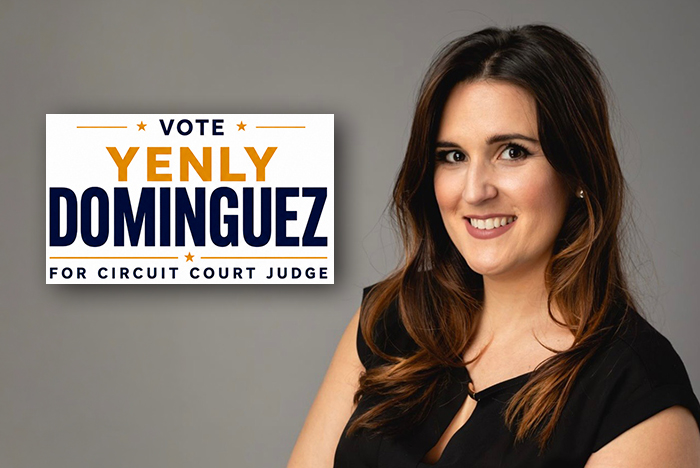
Yenly Domínguez is running for election as a judge for the Florida 11th Circuit Court in Miami-Dade County, Group 76.
She holds a Bachelor of Science in Psychology and a Master of Business Administration (MBA) from Nova Southeastern University, as well as a Juris Doctor (JD) from Ave Maria School of Law.
Domínguez is the founder and principal of the Law Office of Yenly Domínguez, P.A., based in Coral Gables. In her law practice, she has represented clients in real estate, probate, estate planning, business and civil litigation, contract disputes, foreclosure matters, and first-party property insurance litigation. She has also worked on trial teams and gained valuable courtroom experience handling complex legal disputes.
-What qualities do you consider essential for a good judge?
 The purpose of judges is to be patient, to be there and to apply the law, to not favor one side over the other. To not go into a hearing or to a trial already predisposed as to what they’re going to decide. It’s important for them to rule fairly and be impartial. To not bring in their own personal opinions to the matter. I opened my own practice office during the pandemic, and I focused on real estate, both transactional real estate and litigation, real estate probate, and estate planning. It’s important when somebody comes to my office that I block enough time to get everything, their story from beginning to end. And sometimes they come to my office just to vent. That’s a quality that I personally believe is important. It’s important for a judge, again, to be impartial, to be fair, and to apply the law as written. Whatever the law says, that’s how the judge should rule. And so, it’s important for the judge to be able to have that quality amongst other things. Being patient is very important as well. Because many people wait a long time to finally get in front of the judge and speak their piece and tell them their side of the story or whatnot. And it’s important for the judge to be patient and to be able to listen to both sides of the story and not rush. It’s a fine balance of finding efficiency that a case isn’t taking years. But also giving the opportunity to the people to have their side heard impartially and fairly.
-If elected, what do you see as your primary responsibilities?
My primary responsibility would be to ensure that every person who enters the courtroom is treated fairly and with respect. I believe people should feel heard and know that their case is being carefully considered based on the law and the facts. A judge also has a responsibility to be prepared, impartial, and respectful of everyone’s time. Our courts should be efficient, but never at the expense of fairness. Being born and raised in Miami, I have seen firsthand the diversity of our community and the importance of having a court system people can trust. I would work every day to uphold that trust through professionalism and integrity. Above all, my responsibility would be to uphold the law while ensuring that every person who enters the courtroom is treated fairly.
-Some people argue that female judges may bring a different perspective to the bench, particularly in areas such as family law. What is your view on this?
I don’t think it matters whether it’s a female or a male judge behind the bench because our personal views are irrelevant. What I believe of my personal life and my own personal view is not going to roll over into decision making because a law could be different from my personal view. And the objective is to follow the law. Giving the opportunity to the people to have their side heard impartially and fairly. That is what the role of a judge is. So, whether I’m a female or a male doesn’t matter because the law doesn’t see gender.
-The justice system is often seen as complex. How would you respond to that observation?
Even though some people believe that the justice system can be complex, we have laws to follow, and we have personal situations to listen to. And then, on the other side, you have to judge the situation in a way that you rule according to the law. And that makes the system a little bit complex. But, like I previously said, the role of a judge is supposed to be patient and apply the law that is there. A judge is not there to make laws. That’s why it’s so important for people to vote and have their voices heard. The court is the people’s court. So just as the judiciary seat is elected, the people should have the opportunity to elect who they want to be behind the bench.
Yenly Domínguez: “Que sea mujer u hombre no importa porque la ley no ve el género”
Jesús Hernández
Yenly Domínguez se postula para ser elegida jueza del Tribunal del 11.º Circuito Judicial de Florida en el condado de Miami-Dade, Grupo 76.
Posee una licenciatura en Ciencias en Psicología y una Maestría en Administración de Empresas (MBA) de Nova Southeastern University, así como un Doctorado en Derecho (JD) de Ave Maria School of Law.
Domínguez es la fundadora y abogada principal del despacho Law Office of Yenly Domínguez, P.A., con sede en Coral Gables. En su práctica legal, ha representado a clientes en asuntos de bienes raíces, sucesiones, planificación patrimonial, derecho empresarial y litigios civiles, disputas contractuales, procedimientos de ejecución hipotecaria y litigios de seguros de propiedad de primera parte. También ha trabajado en equipos de juicio y ha adquirido una valiosa experiencia en los tribunales al manejar disputas legales complejas.
– ¿Qué cualidades considera esenciales para un buen juez?
El propósito de los jueces es ser pacientes, estar presentes y aplicar la ley, sin favorecer a una parte sobre la otra. No deben entrar a una audiencia o a un juicio con una predisposición sobre lo que van a decidir. Es importante que fallen de manera justa y sean imparciales, sin traer sus opiniones al caso. Abrí mi propia oficina durante la pandemia y me enfoqué en bienes raíces, tanto en transacciones como en litigios, así como en sucesiones inmobiliarias y planificación patrimonial. Es importante que cuando alguien llega a mi oficina, yo reserve suficiente tiempo para conocer toda su historia de principio a fin. A veces las personas también vienen simplemente a desahogarse. Esa es una cualidad que personalmente considero importante. Es fundamental que un juez sea imparcial, justo y aplique la ley tal como está escrita. Lo que diga la ley es como el juez debe decidir. Por eso, es importante que el juez tenga esa cualidad, entre otras. La paciencia también es muy importante, ya que muchas personas esperan mucho tiempo para finalmente presentarse ante un juez y poder expresar su versión de los hechos. Es clave que el juez escuche ambas partes con paciencia y sin apresurarse. Existe un equilibrio delicado entre lograr eficiencia para que un caso no tarde años, y al mismo tiempo brindar a las personas la oportunidad de ser escuchadas de manera imparcial y justa.
-Si es elegida, ¿cuáles considera que serán sus principales responsabilidades?
Mi principal responsabilidad sería garantizar que toda persona que entre a la sala del tribunal sea tratada de manera justa y con respeto. Creo que las personas deben sentirse escuchadas y saber que su caso está siendo cuidadosamente considerado con base en la ley y los hechos. Un juez también tiene la responsabilidad de estar preparado, ser imparcial y respetar el tiempo de todos. Nuestros tribunales deben ser eficientes, pero nunca a costa de la justicia. Al haber nacido y crecido en Miami, he visto de primera mano la diversidad de nuestra comunidad y la importancia de contar con un sistema judicial en el que la gente pueda confiar. Trabajaría cada día para mantener esa confianza a través del profesionalismo y la integridad. Sobre todo, mi responsabilidad sería aplicar la ley mientras me aseguro de que toda persona que entre a la sala del tribunal sea tratada de manera justa.
-Hay personas argumentan que las juezas pueden aportar una perspectiva diferente al estrado, especialmente en áreas como el derecho de familia. ¿Cuál es su opinión al respecto?
No creo que importe si es una jueza o un juez quien está en el estrado, porque nuestras opiniones son irrelevantes. Lo que yo piense en mi vida personal no debe influir en la toma de decisiones, ya que la ley puede ser distinta a mis opiniones. El objetivo es seguir la ley. Dar a las personas la oportunidad de que su caso sea escuchado de manera imparcial y justa es el rol de un juez. Por lo tanto, que yo sea mujer u hombre no importa porque la ley no ve el género.
-El sistema de justicia a menudo se percibe como complejo. ¿Cómo respondería a esa observación?
Aunque algunas personas consideran que el sistema de justicia es complejo, tenemos leyes que seguir y situaciones personales que escuchar. Luego, se debe evaluar cada caso y dictar una decisión conforme a la ley. Eso puede hacer que el sistema parezca un poco complejo. Sin embargo, como mencioné anteriormente, el rol de un juez es ser paciente y aplicar la ley existente. Un juez no está para crear leyes. Por eso es tan importante que las personas voten y hagan oír su voz. El tribunal es el tribunal del pueblo. Así como los cargos judiciales son elegidos, el pueblo debe tener la oportunidad de elegir a quien desee ver en el estrado.