By State Representative Tom Fabricio
This November, Florida voters will have a rare and powerful opportunity to deliver real property tax relief to homeowners across our state. Amendment 3, the Save Our Homes from Excessive Property Taxes amendment, will appear on the November 2026 general election ballot. When voters see it, they should understand that this is more than another line on a ballot. It is an opportunity to protect homeownership, strengthen families, and make Florida more affordable.
The Florida Legislature placed this decision in the hands of the people through HJR 1-F. I supported this effort because I believe Floridians deserve a direct voice on whether their property taxes should continue rising year after year, or whether homeowners should finally receive the kind of substantial relief they have earned.
For too many families, property taxes have become one of the most stressful costs of homeownership. A home is not just a piece of property. It is where families are raised, where seniors retire, where children grow up, and where memories are made. Yet, every year, homeowners are asked to pay more simply to remain in the homes they worked so hard to purchase.
The numbers tell the story. In 2024, statewide property tax levies in Florida reached $55.2 billion, more than double the $26.5 billion collected in 2014. That kind of growth has far outpaced what many families can absorb. At the same time, Floridians are already facing higher costs for groceries, insurance, utilities, and everyday necessities. Property tax relief is not a luxury. For many households, it is a necessity.
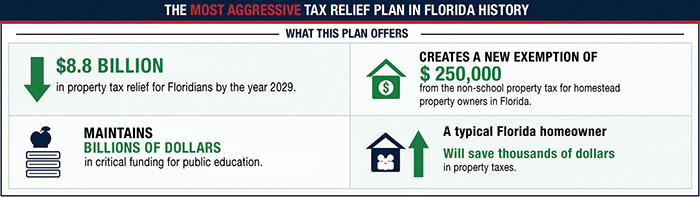
Amendment 3 would create meaningful, substantial relief for homestead property owners. If approved by voters, the measure would increase the homestead exemption for non-school property taxes to $150,000 beginning in 2027 and to $250,000 beginning in 2028. That means many homeowners could see thousands of dollars in savings, depending on their home value, local millage rates, and individual circumstances.
Importantly, the proposal protects public education by leaving school district ad valorem taxes in place. That balance matters. We can provide serious relief to homeowners while still recognizing the importance of education, public safety, infrastructure, and other core services that Floridians rely on.
The amendment also recognizes the value of permanent Florida residency. The increased exemption is directed to those who make Florida their home, while new residents after the start of 2027 would need to maintain Florida residency for five years before receiving the increased benefit. This approach helps ensure that tax relief is focused on the people who have planted roots here and are committed to our communities.
Amendment 3 also helps renters and small businesses by lowering the annual assessment cap on many non-homestead properties from 10% to 5%. When commercial and rental property taxes rise too quickly, those costs can be passed down to small businesses, tenants, and consumers. Limiting those increases can help reduce upward pressure on rents and costs throughout the local economy.
Some will say government cannot afford to give taxpayers this money back. I believe taxpayers cannot afford to keep sending more and more of their hard-earned money to government without reform. Local governments must live within reasonable limits, prioritize core services, and respect the families who pay the bills.
Because this is a constitutional amendment, it requires at least 60% voter approval to pass. That means every vote matters. The voter registration deadline for the 2026 General Election is October 5. The mandatory early voting period is October 24 through October 31, though counties may offer additional early voting days. Election Day is November 3, 2026.
This November, Floridians can send a clear message: homeownership must be protected, families deserve relief, and government must be accountable to the people it serves. When you see Amendment 3 on the ballot, vote YES to reduce property taxes, protect homeowners, and make Florida more affordable for the families who call it home.
Una oportunidad histórica para reducir los impuestos sobre la propiedad en Florida
Por el Representante Estatal Tom Fabricio
Este noviembre, los votantes de Florida tendrán una oportunidad extraordinaria para aprobar un alivio real en los impuestos sobre la propiedad. La Enmienda 3, conocida como Save Our Homes from Excessive Property Taxes, aparecerá en la boleta electoral de la elección general de noviembre de 2026. Cuando los votantes la vean, deben entender que no se trata de una simple línea en una boleta. Es una oportunidad para proteger la vivienda propia, fortalecer a las familias y hacer que Florida sea más asequible.
La Legislatura de Florida puso esta decisión directamente en manos del pueblo mediante la HJR 1-F. Apoyé este esfuerzo porque creo que los floridanos merecen decidir si los impuestos sobre sus hogares deben seguir aumentando año tras año o si los propietarios finalmente deben recibir el alivio sustancial que se han ganado.
Para demasiadas familias, los impuestos sobre la propiedad se han convertido en uno de los costos más difíciles de manejar. Una casa no es simplemente una propiedad. Es el lugar donde se cría una familia, donde nuestros adultos mayores disfrutan su retiro, donde crecen nuestros hijos y donde se construyen recuerdos. Sin embargo, cada año muchos propietarios pagan más solo para permanecer en la vivienda que tanto sacrificio les costó comprar.
Los números explican la urgencia. En 2024, los impuestos sobre la propiedad recaudados a nivel estatal en Florida llegaron a $55.2 mil millones, más del doble de los $26.5 mil millones recaudados en 2014. Ese crecimiento ha superado por mucho lo que muchas familias pueden absorber. Al mismo tiempo, los floridanos ya enfrentan costos más altos en alimentos, seguros, servicios públicos y necesidades diarias. Reducir los impuestos sobre la propiedad no es un lujo. Para muchas familias, es una necesidad.
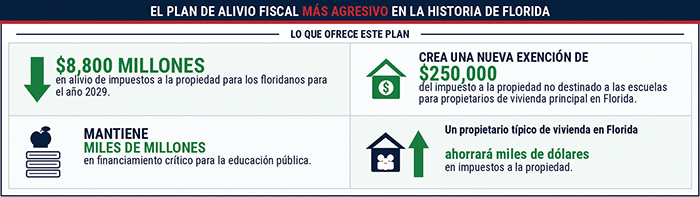
La Enmienda 3 ofrecería un alivio importante y sustancial para los dueños de viviendas principales. Si los votantes la aprueban, la medida aumentaría la exención de homestead, o residencia principal, para impuestos no escolares a $150,000 a partir de 2027 y a $250,000 a partir de 2028. Eso significa que muchos propietarios podrían ahorrar miles de dólares, dependiendo del valor de su vivienda, las tasas locales y sus circunstancias individuales.
Es importante destacar que la propuesta protege la educación pública porque mantiene los impuestos ad valorem de los distritos escolares. Ese balance es fundamental. Podemos ofrecer un alivio serio a los propietarios mientras reconocemos la importancia de la educación, la seguridad pública, la infraestructura y otros servicios esenciales que los floridanos necesitan.
La enmienda también reconoce el valor de la residencia permanente en Florida. La exención aumentada se dirige a quienes hacen de Florida su hogar. Las personas que establezcan residencia en Florida después del inicio de 2027 tendrían que mantener residencia durante cinco años antes de recibir el beneficio aumentado. Este enfoque ayuda a asegurar que el alivio tributario se concentre en quienes han echado raíces aquí y están comprometidos con nuestras comunidades.
La Enmienda 3 también ayuda a inquilinos y pequeños negocios al reducir de 10% a 5% el límite anual de aumento en la tasación de muchas propiedades que no son residencia principal. Cuando los impuestos sobre propiedades comerciales o de alquiler suben demasiado rápido, esos costos pueden terminar afectando a pequeños negocios, inquilinos y consumidores. Limitar esos aumentos puede ayudar a reducir presiones sobre los alquileres y los costos en la economía local.
Algunos dirán que el gobierno no puede darse el lujo de devolver este dinero a los contribuyentes. Yo creo que los contribuyentes no pueden darse el lujo de seguir enviando más y más de su dinero al gobierno sin una reforma seria. Los gobiernos locales deben vivir dentro de límites razonables, priorizar los servicios esenciales y respetar a las familias que pagan las cuentas.
Como se trata de una enmienda constitucional, necesita al menos el 60% de aprobación de los votantes para ser adoptada. Por eso, cada voto cuenta. La fecha límite para registrarse para votar en la Elección General de 2026 es el 5 de octubre. El período obligatorio de votación anticipada será del 24 al 31 de octubre, aunque los condados pueden ofrecer días adicionales. El Día de las Elecciones será el 3 de noviembre de 2026.
Este noviembre, los floridanos pueden enviar un mensaje claro: la vivienda propia debe ser protegida, las familias merecen alivio y el gobierno debe rendir cuentas a las personas a quienes sirve. Cuando vea la Enmienda 3 en la boleta, vote SÍ para reducir los impuestos sobre la propiedad, proteger a los dueños de vivienda y hacer que Florida sea más asequible para las familias que llaman a este estado su hogar.