Hispanidad is the community of peoples, cultures, and histories united by the Spanish language and by a shared legacy that spans oceans and centuries. More than 600 million people speak Spanish worldwide, and nearly 500 million have it as their native tongue. Behind that figure lies something deeper than a language: a way of naming reality, of celebrating, of remembering, and of living together. Every October 12, the term returns to public debate, and understanding it requires looking at its origin, its meaning, and its tensions.
Origin of a Word
The concept emerged in the early twentieth century. In 1926, the Spanish priest Zacarías de Vizcarra proposed the term “Hispanidad” to describe the spirit that unites peoples of Hispanic heritage, and soon afterward Ramiro de Maeztu developed it as a cultural and political idea. Before that, people spoke of the “Día de la Raza” (Day of the Race), a widespread expression in Latin America that many now consider outdated. In 1958, Spain made the Fiesta de la Hispanidad official, and in 1987 the date was renamed Spain’s National Day. Each country marks the occasion under a different name: Day of Indigenous Resistance, Day of Cultural Diversity, or Day of Respect for Diversity, among others.
More Than a Language
To speak of Hispanidad is to speak of a community that shares a language, but not a single identity. The Spanish heard in Lima is not that of Madrid, nor of Mexico City, nor of Buenos Aires. Each region has shaped it with its own accent, vocabulary, and turns of phrase. That variety does not divide; it enriches. From Quechua came words like “papa” and “cancha”; from Nahuatl, “chocolate” and “aguacate”; from Arabic, “aceituna” and “almohada.” Spanish is itself proof that cultures blend and transform one another.
The shared heritage also includes literature, music, food, and belief. Cervantes and Sor Juana Inés de la Cruz, Borges and García Márquez, Neruda and Rosalía de Castro belong to a single conversation that has lasted centuries. The same is true of flamenco, cumbia, tango, and son, or of popular festivals where Indigenous, African, and European traditions merge. Hispanidad is, above all, a living mestizaje, a blending of peoples.
A History of Light and Shadow
It would be unfair to present this legacy without acknowledging its darker side. The expansion of the Spanish empire brought conquest, violence, disease, slavery, and the destruction of entire civilizations. The native peoples of the Americas suffered immense losses, and their descendants still fight for recognition of their rights, their languages, and their memory. That is why October 12 stirs opposing emotions: for some it is a source of pride and unity; for others, a reminder of pain and historical debt.
A mature outlook does not need to choose between celebrating and criticizing. It can acknowledge what was built and what was destroyed, honoring those who resisted as well as those who created new cultures out of the encounter. Today’s Hispanidad is not defined by the conquest of the past, but by how present-day societies choose to remember it and by what they do with that memory.
Hispanidad in the Twenty-First Century
Today the Hispanic world is a leading cultural and economic force. Spanish is the second most spoken language by number of native speakers and one of the most used on the internet. More than 60 million people of Hispanic origin live in the United States, making it one of the largest Spanish-speaking countries on the planet. Spanish-language music tops global charts, and writers, filmmakers, and digital creators from across the Hispanic world now reach audiences that were once out of reach.
That presence opens enormous opportunities. For those who create content, teach, or start businesses, the Spanish-speaking market represents a broad, curious, and connected audience, with a culture that values family, the spoken word, and community. But it also brings responsibility: to represent that diversity respectfully, without reducing it to stereotypes or to a single version of history.
A Bridge, Not a Border
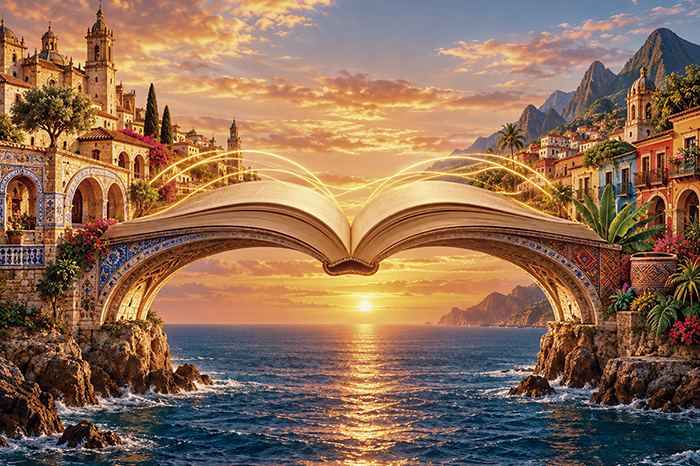
The best way to understand Hispanidad is as a bridge. It joins countries separated by thousands of miles yet close in the way they speak, feel, and celebrate. It joins past and present, and those who stayed with those who emigrated and carried their culture to other lands. And it can also join painful memories with the desire to build a more just future.
To celebrate Hispanidad, then, does not mean ignoring history but embracing all of it. It means valuing the language we share, defending the richness of the Indigenous languages that accompany it, and recognizing that no identity is born pure. We are the result of encounters, sometimes painful and sometimes fruitful, that are still being written.
In the end, Hispanidad is an invitation: to speak our language with pride, to know our roots in depth, and to extend a hand to those who share with us, on either side of the ocean, the same word for home.
La Hispanidad: un Puente entre dos Mundos
La Hispanidad es el conjunto de pueblos, culturas e historias unidos por la lengua española y por un legado común que atraviesa océanos y siglos. Más de 600 millones de personas hablan español en el mundo, y cerca de 500 millones lo tienen como lengua materna. Detrás de esa cifra hay algo más profundo que un idioma: una manera de nombrar la realidad, de celebrar, de recordar y de convivir. Cada 12 de octubre, el término vuelve al debate público, y entenderlo exige mirar su origen, su significado y también sus tensiones.
Origen de una palabra
El concepto nació a comienzos del siglo XX. En 1926, el sacerdote español Zacarías de Vizcarra propuso el término «Hispanidad» para designar el espíritu que une a los pueblos de herencia hispana, y poco después Ramiro de Maeztu lo desarrolló como idea cultural y política. Antes se hablaba de «Día de la Raza», una expresión muy extendida en América Latina que hoy muchos consideran superada. En 1958, España oficializó la Fiesta de la Hispanidad, y en 1987 la fecha pasó a llamarse Fiesta Nacional de España. En cada país la celebración recibe un nombre distinto: Día de la Resistencia Indígena, Día de la Diversidad Cultural o Día del Respeto a la Diversidad, entre otros.
Más que una lengua
Hablar de Hispanidad es hablar de una comunidad que comparte un idioma, pero no una sola identidad. El español que se escucha en Lima no es el de Madrid, ni el de Ciudad de México, ni el de Buenos Aires. Cada región lo ha moldeado con su acento, su vocabulario y sus giros. Esa variedad no divide: enriquece. Del quechua llegaron palabras como «papa» y «cancha»; del náhuatl, «chocolate» y «aguacate»; del árabe, «aceituna» y «almohada». El español es en sí mismo una prueba de que las culturas se mezclan y se transforman.
La herencia compartida abarca también la literatura, la música, la gastronomía y las creencias. Cervantes y Sor Juana Inés de la Cruz, Borges y García Márquez, Neruda y Rosalía de Castro pertenecen a una misma conversación que dura siglos. Lo mismo ocurre con el flamenco, la cumbia, el tango y el son, o con las fiestas populares donde se funden tradiciones indígenas, africanas y europeas. La Hispanidad es, ante todo, un mestizaje vivo.
Una historia con luces y sombras
Sería injusto presentar este legado sin reconocer su lado oscuro. La expansión del imperio español trajo consigo conquista, violencia, enfermedades, esclavitud y la destrucción de civilizaciones enteras. Los pueblos originarios de América sufrieron pérdidas inmensas, y sus descendientes aún luchan por el reconocimiento de sus derechos, sus lenguas y su memoria. Por eso el 12 de octubre despierta emociones opuestas: para unos es motivo de orgullo y de unión; para otros, un recordatorio de dolor y de deuda histórica.
Una mirada madura no necesita elegir entre celebrar y criticar. Puede reconocer lo que se construyó y lo que se destruyó, honrar a quienes resistieron y también a quienes crearon culturas nuevas a partir del encuentro. La Hispanidad de hoy no se define por la conquista del pasado, sino por la manera en que las sociedades actuales deciden recordarla y por lo que hacen con ese recuerdo.
La Hispanidad en el siglo XXI
Hoy la comunidad hispana es una fuerza cultural y económica de primer orden. El español es el segundo idioma más hablado por número de hablantes nativos y uno de los más usados en internet. En Estados Unidos viven más de 60 millones de personas de origen hispano, lo que convierte a ese país en uno de los mayores territorios de habla hispana del planeta. La música en español domina las listas globales, y escritores, cineastas y creadores digitales de todo el mundo hispano llegan a públicos que antes les eran inaccesibles.
Esa presencia abre oportunidades enormes. Para quienes crean contenido, enseñan o emprenden, el mercado hispanohablante representa una audiencia amplia, curiosa y conectada, con una cultura que valora la familia, la palabra y la comunidad. Pero también implica responsabilidad: representar esa diversidad con respeto, sin reducirla a estereotipos ni a una sola versión de la historia.
Un puente, no una frontera
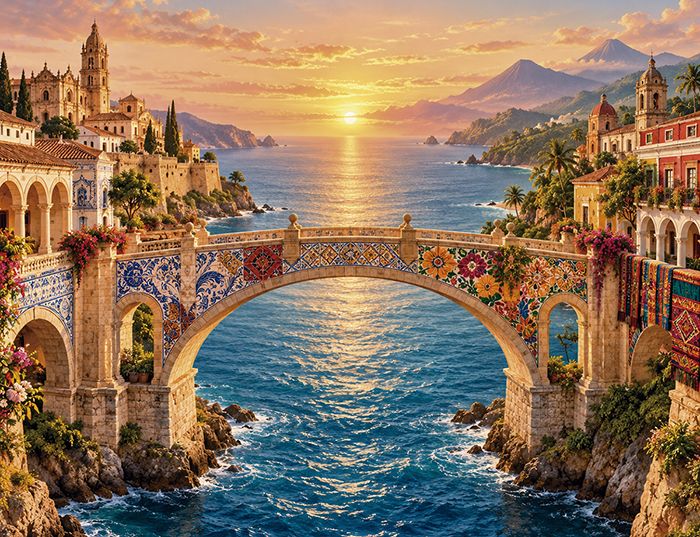
La mejor manera de entender la Hispanidad es como un puente. Une a países separados por miles de kilómetros, pero cercanos en la forma de hablar, de sentir y de celebrar. Une el pasado con el presente, y a quienes se quedaron con quienes emigraron y llevaron su cultura a otras tierras. Y puede unir también las memorias dolorosas con el deseo de construir un futuro más justo.
Celebrar la Hispanidad, entonces, no significa ignorar la historia, sino asumirla completa. Significa valorar el idioma que compartimos, defender la riqueza de las lenguas indígenas que lo acompañan y reconocer que ninguna identidad nace pura. Somos el resultado de encuentros, a veces dolorosos y a veces fecundos, que aún siguen escribiéndose.
Al final, la Hispanidad es una invitación: a hablar con orgullo nuestra lengua, a conocer a fondo nuestras raíces y a tender la mano a quienes comparten con nosotros, de uno u otro lado del océano, la misma palabra para decir hogar.