Between the solidarity mustache and International Men’s Day, November invites us to talk about what many keep quiet: men’s physical and emotional health.
Every November, thousands of men grow out their mustaches, and it is not a fashion trend. It is the most visible sign of a month the world dedicates to men’s health, with its central date on November 19, when International Men’s Day is celebrated. Behind the gesture lies a serious message: men live, on average, several years less than women, and a good part of that gap could be narrowed through prevention, early diagnosis, and more conversation.
 A Date with a Purpose
International Men’s Day took hold in the late 1990s, driven by Trinidadian academic Jerome Teelucksingh, and today it is observed in dozens of countries. It does not seek to compete with other observances or to take visibility away from women, but to complement the equality agenda with a look at the challenges men face: health, emotional well-being, family relationships, fatherhood, and positive models of masculinity.
Joining that date is the Movember movement, born in Australia in the early 2000s. Its formula is simple and effective: participants grow a mustache throughout November to start conversations and raise funds for research on prostate cancer, testicular cancer, and mental health. What began as a joke among friends became one of the most recognized health campaigns on the planet.
The Silent Enemy: Not Going to the Doctor
If there is one habit specialists keep repeating, it is that many men see a doctor too late. Out of habit, fear, or the idea that “it’s nothing,” they postpone checkups and downplay symptoms until the problem advances. That delay weighs especially heavily in diseases where early detection changes the outlook.
Prostate cancer is one of the most common in men and, when detected early, has high chances of successful treatment. Testicular cancer, which mainly affects young men, also responds very well when identified in time. Added to this are cardiovascular disease, high blood pressure, diabetes, and high cholesterol, which often progress for years without clear symptoms.
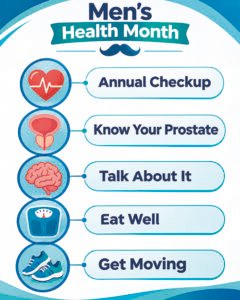
The recommendations are well known, although not always followed: regular checkups according to age and family history, monitoring of blood pressure and glucose, a balanced diet, regular physical activity, moderation with alcohol, and quitting tobacco. A doctor should indicate which tests are appropriate in each case, but the first step is up to each person: making the appointment.
Mental Health, the Great Outstanding Debt
Perhaps the most urgent aspect of Men’s Month is the emotional one. According to estimates from international health organizations, men account for the majority of suicide deaths worldwide. At the same time, they tend to seek psychological help less often than women.
Experts point to deeply rooted cultural mandates: “men don’t cry,” “you have to tough it out,” “asking for help is weakness.” These ideas push many to stay silent about sadness, stress, or anxiety, or to take refuge in work, isolation, or alcohol. The result is a suffering that can go unnoticed even by those around them.
Breaking that silence does not require grand speeches. Sometimes it is enough to ask sincerely, “How are you, really?” and stay to listen. Friends, brothers, fathers, and coworkers play an enormous role in normalizing the idea that talking about what hurts is an act of strength, not fragility.
Beyond the Diagnosis: Bonds and Example
Men’s Month also invites us to look at the social dimension. Studies on longevity agree that maintaining strong relationships protects health. Many men, however, see their close circle shrink with age. Encouraging friendship, community participation, and present fatherhood benefits both them and their families.
Fathers, moreover, teach by example. A son who sees his father take care of himself, go to the doctor, and talk about his emotions learns that self-care is part of being a man.
A Month to Act
November offers the perfect excuse to move from intention to action: schedule the pending checkup, call the friend who has been out of touch for a while, share reliable information, or join a charity campaign. The mustache is optional, but the commitment is not.
If this topic hits close to home and you are going through a difficult time, talking with a health professional or someone you trust is a good first step, and I can help you find resources if you need them.
Noviembre, el mes para cuidar al hombre
Entre el bigote solidario y el Día Internacional del Hombre, el mes de noviembre invita a hablar de lo que muchos callan: la salud física y emocional masculina.
Cada noviembre, miles de hombres se dejan crecer el bigote, y no es una moda. Es la señal más visible de un mes que el mundo dedica a la salud masculina y que tiene su fecha central el 19 de noviembre, cuando se celebra el Día Internacional del Hombre. Detrás del gesto hay un mensaje serio: los hombres viven, en promedio, varios años menos que las mujeres, y buena parte de esa diferencia podría reducirse con prevención, diagnóstico temprano y más conversación.
 Una fecha con propósito
El Día Internacional del Hombre se consolidó a finales de los años noventa, impulsado por el académico trinitense Jerome Teelucksingh, y hoy se conmemora en decenas de países. No busca competir con otras fechas ni restar visibilidad a las mujeres, sino complementar la agenda de igualdad con una mirada sobre los desafíos que enfrentan los hombres: salud, bienestar emocional, relaciones familiares, paternidad y modelos positivos de masculinidad.
A esa fecha se suma el movimiento Movember, nacido en Australia a comienzos de los años 2000. Su fórmula es sencilla y eficaz: los participantes se dejan crecer el bigote durante noviembre para abrir conversaciones y recaudar fondos destinados a investigación sobre cáncer de próstata, cáncer testicular y salud mental. Lo que empezó como una broma entre amigos se convirtió en una de las campañas de salud más reconocidas del planeta.
El enemigo silencioso: no ir al médico
Si hay un hábito que los especialistas repiten, es que muchos hombres consultan tarde. Por costumbre, por miedo o por la idea de que “no pasa nada”, postergan chequeos y minimizan síntomas hasta que el problema avanza. Esa demora pesa especialmente en enfermedades donde detectar a tiempo cambia el pronóstico.
El cáncer de próstata es uno de los más frecuentes en hombres y, detectado temprano, tiene altas posibilidades de tratamiento exitoso. El cáncer testicular, que afecta sobre todo a hombres jóvenes, también responde muy bien cuando se identifica a tiempo. A ello se suman las enfermedades cardiovasculares, la hipertensión, la diabetes y el colesterol alto, que suelen avanzar sin síntomas claros durante años.
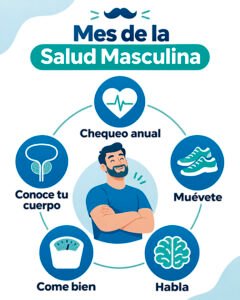
Las recomendaciones son conocidas, aunque no siempre se practican: chequeos periódicos según la edad y los antecedentes familiares, control de la presión arterial y la glucosa, alimentación equilibrada, actividad física regular, moderación con el alcohol y abandono del tabaco. Un médico es quien debe indicar qué estudios corresponden en cada caso, pero el primer paso depende de cada persona: pedir la cita.
La salud mental, la gran deuda pendiente
Quizá el aspecto más urgente del Mes del Hombre sea el emocional. Según estimaciones de organismos internacionales de salud, los hombres representan la mayoría de las muertes por suicidio en el mundo. Al mismo tiempo, suelen buscar ayuda psicológica con menos frecuencia que las mujeres.
Los expertos señalan que influyen mandatos culturales arraigados: “los hombres no lloran”, “hay que aguantar”, “pedir ayuda es debilidad”. Estas ideas empujan a muchos a callar la tristeza, el estrés o la ansiedad, o a refugiarse en el trabajo, el aislamiento o el consumo de alcohol. El resultado es un sufrimiento que puede pasar inadvertido incluso para quienes los rodean.
Romper ese silencio no requiere grandes discursos. A veces basta con preguntar con sinceridad “¿cómo estás de verdad?” y quedarse a escuchar. Los amigos, los hermanos, los padres y los compañeros de trabajo tienen un papel enorme en normalizar que hablar de lo que duele es un acto de fortaleza, no de fragilidad.
Más allá del diagnóstico: vínculos y ejemplo
El Mes del Hombre también invita a mirar la dimensión social. Los estudios sobre longevidad coinciden en que mantener vínculos sólidos protege la salud. Muchos hombres, sin embargo, ven reducido su círculo cercano con la edad. Fomentar la amistad, la participación en la comunidad y una paternidad presente beneficia tanto a ellos como a sus familias.
Los padres, además, enseñan con el ejemplo. Un hijo que ve a su padre cuidarse, ir al médico y hablar de sus emociones aprende que cuidarse es parte de ser hombre.
Un mes para actuar
Noviembre ofrece una excusa perfecta para pasar de la intención a la acción: agendar el chequeo pendiente, llamar al amigo que lleva tiempo desaparecido, compartir información confiable o sumarse a una campaña solidaria. El bigote es opcional, pero el compromiso no.
Si este tema te toca de cerca y atraviesas un momento difícil, hablar con un profesional de la salud o con alguien de confianza es un buen primer paso, y puedo ayudarte a buscar recursos si lo necesitas.